
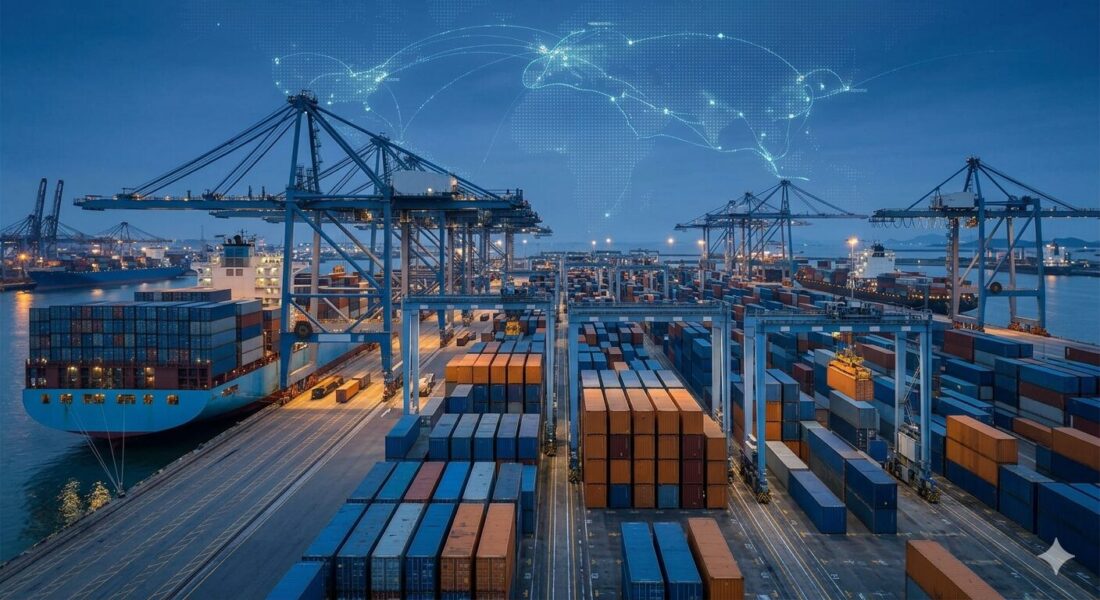
For decades, the consensus was clear: free trade was the engine of global prosperity. Ronald Reagan famously championed it, and most economists still agree that tariffs act as a drag on the American economy. So, when the rules changed in 2016 and tariffs disrupted global trade, many were hoping that the next administration would change that. But 2020 came and went, and tariffs stayed.
The hope was that tariffs were temporary, that the 2020s would bring a “return to normal.” Instead, 2025 saw trade barriers expand and harden. Today, we recognize that tariffs have become a fixture and that it is time to treat them as a structural reality of the Global Supply Chain.
Hope is Not a Strategy.
If anything, tariffs are likely to expand in scope and complexity. Current deep geopolitical shifts, evolving industrial policies, accelerating technological innovations, and wars have changed our world. Driven by a global focus on “economic security,” the rules of engagement for sourcing—particularly from China—have changed permanently.
When faced with this reality, most companies fall into one of three reactive traps:
- Overreaction: Panic-shifting production to new regions without accounting for hidden costs, quality degradation, or the lack of local infrastructure.
- Underreaction: Absorbing the cost of tariffs and eroding margins while praying for a policy reversal that isn’t coming.
- Inaction: Paralysis by analysis. Delaying decisions due to uncertainty, which eventually results in a loss of market share.
Without a data-driven strategy, all three paths lead to the same destination: a loss of competitiveness.
The China Paradox: Why “Just Leaving” Isn’t Simple
Despite the noise, China remains a cornerstone of global manufacturing. The reality is that for many product categories, China offers an ecosystem that is currently impossible to replicate:
- Unmatched Scale: The ability to ramp up production at a speed others can’t match.
- Supplier Density: Deep clusters of component manufacturers located within miles of assembly hubs.
- Technical Maturity: High-level engineering and sophisticated logistics infrastructure.
The question, therefore, is not simply whether to stay or leave — it’s how to leverage China sourcing and operate intelligently within a high tariff environment.
What Tariff Mitigation Actually Means
Tariff mitigation is often misinterpreted as a search for loopholes or regulatory workarounds. But that is not how it works: in a modern trade environment, true mitigation is about resilience by design. It involves:
- Strategic Restructuring: Sourcing components across multiple geographies to change the product’s “Country of Origin” profile.
- Operational Optimization: Renegotiating supplier relationships within China to share the tariff burden, rethinking logistics and inventory strategies
- Total Landed Cost Modeling: Shifting the focus from “unit price” to the full cost of getting a product to the customer’s door, including taxes, duties, and logistics.
The most effective solutions are rarely obvious; they must be tailored to the product, as they are not one-size-fits-all and not one-dimensional.
Traditional approaches to mitigation often fail because they lack the combination of strategic vision and “boots on the ground” reality.
- Internal procurement teams often lack external benchmarking and real-time visibility across supplier networks.
- Sourcing agents focus on transactional execution rather than long-term strategy.
- Large consulting firms provide analyses that lack operational depth within China’s manufacturing ecosystem.
What is often missing is a bridge between strategy and execution.
Navigating this landscape requires more than a tariff spreadsheet. It requires an intimate understanding of:
- Supplier Psychology: How Chinese factories respond to external pressure and where they are willing to flex.
- Structural vs. Negotiable Costs: Knowing which costs are structural and legitimate and which prices are opportunistic.
- Value-Added Diversification: Recognizing when moving production creates a competitive advantage versus when it merely creates a new set of risks.
This combination of advisory insight and operational capability allows companies to move from analysis to action with confidence and:
- understand their supply chains in detail
- evaluate trade-offs clearly
- build flexibility into their sourcing structures
- adapt as conditions evolve
These operational realities are best understood through the filter of experience.
The CPG Approach: 48 Years of Perspective
At CPG, we treat tariff mitigation as a combined strategic and operational challenge. We have maintained an uninterrupted presence in China since 1978. During that time, we have supported our clients through multiple cycles of change, navigating every challenge from the early days of trade restrictions to global integration and now to renewed fragmentation.
We don’t just provide advice; we build the bridge from analysis to action. We help assess true exposure to tariffs, design a sourcing structure that remains competitive, and support the implementation on the ground.
“The greatest danger in times of turbulence is not the turbulence — it is to act with yesterday’s logic.” (Peter Drucker). Hoping for a return to low tariffs is seductive; after all, the logic of free trade is compelling, but this kind of thinking can become a persistent drag on competitiveness. Instead, we must come to terms with the stark reality that tariffs aren’t a disruption—they are the environment, the water we all swim in. Those who adapt to this new environment will thrive.